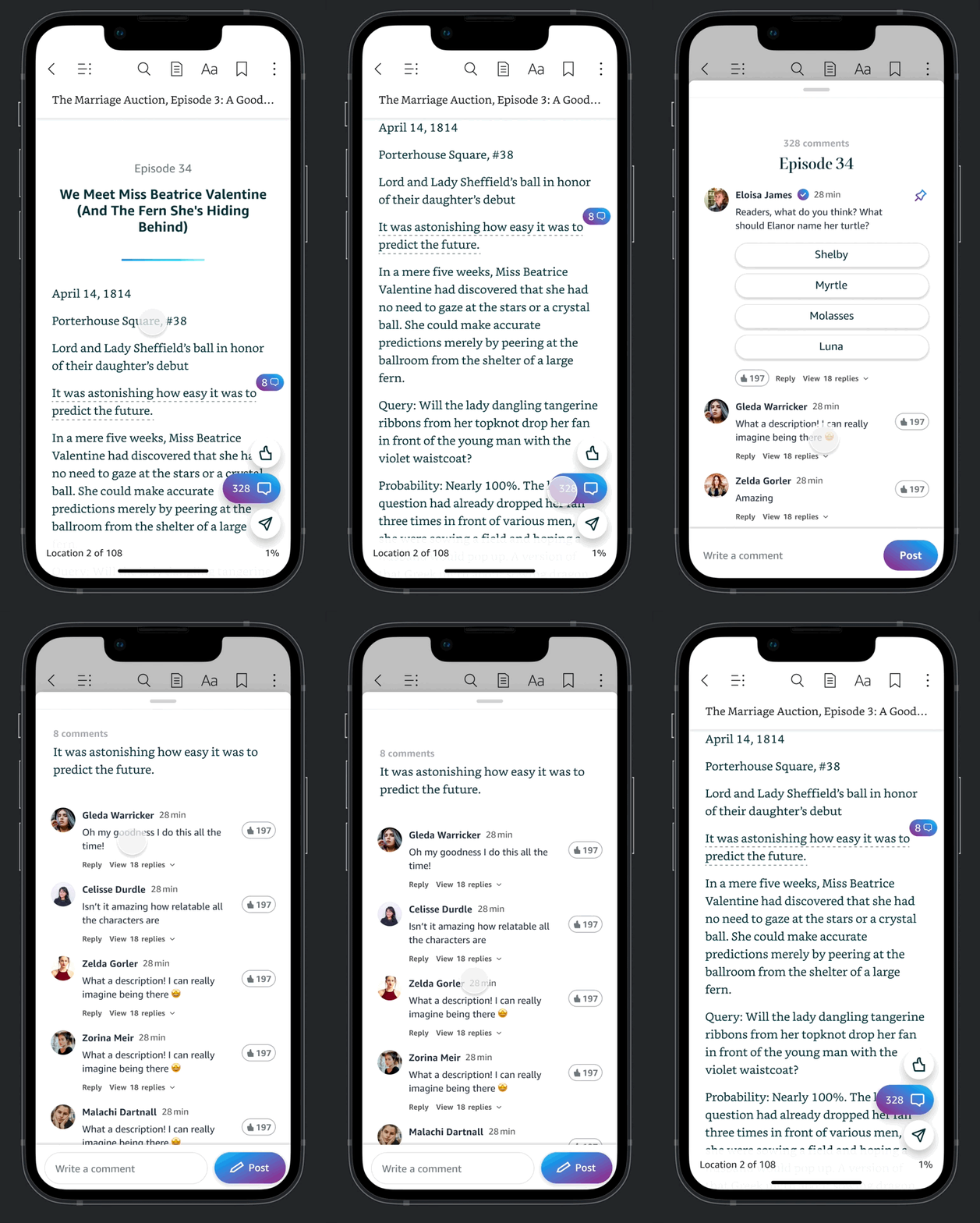
Launched in 2021, Kindle Vella offers readers short-form, serialized content. The Kindle Vella team always knew they wanted to offer some kind of social features, but had de-prioritized them for their initial launch. In 2022, I was tapped to help launch their very first features in the space.
The challenge
Prior to joining the project, the team had made considerable progress on the backend of Kindle Vella's new social feature by integrating with Amazon Book Clubs. While this was a huge accelerator on the tech side, it came with some tricky constraints for the user experience.
Could we make it work for Kindle Vella readers? And even more ambitious — could we make it into a cohesive backend and front end system for enabling social experiences at Amazon, anywhere?
Mission accepted 🕵️♀️
✨ Good to know: Kindle Vella is a place where readers can find short-form, serialized fiction. Like TV, but books. Authors publish their stories one chapter at a time, and readers use tokens to unlock them as they read.
No one should have to suffer a cliffhanger alone 🧗♀️
We started by investigating what kind of social interactions our serial readers wanted, and how they might be different from book clubbers. Through desk research & competitive analyses, we discovered fairly different mental models around how these different users wanted "social" to go with their reading.
- Different ages & expectations: Book clubbers tended to be in their 40's and more desktop-oriented. For Clubbers, book clubs were a networking & socializing opportunity first, with books as a medium. Great book clubs felt to thier members like a group of close friends, safe to share anything they wanted with each other (book related, or not). Individuals started topics, and long conversations flowed from great topic-starters.
- Serial readers, on the other hand, skewed young — early 20's, and almost exclusively reading on their phones. Serial readers read & react "in the momemt," treating content & social more like a feed than a club. Their comments could be lengthy theories about what might happen next, or a simple "💀" in response to a cliffhanger or especially funny punchline.
- Speaking of — cliffhangers are a major part of serial stories (it's how authors get their readers to come back the next week!) And we learned that theorizing about what comes next in between episodes was a huge part of serial/social reading culture.
- The other huge part of serial social reading culture was the ability for authors and readers to connect with each other. Unlike with book clubs, where authors are a rare and more formal presence, serial readers consistently wrote messages to their favorite authors, giving them encouragement and asking for their favorite characters to show up in the next episode. Likewise, serial authors wanted to get immediate, chapter-by-chapter feedback from readers before going too far down a particular path while writing.
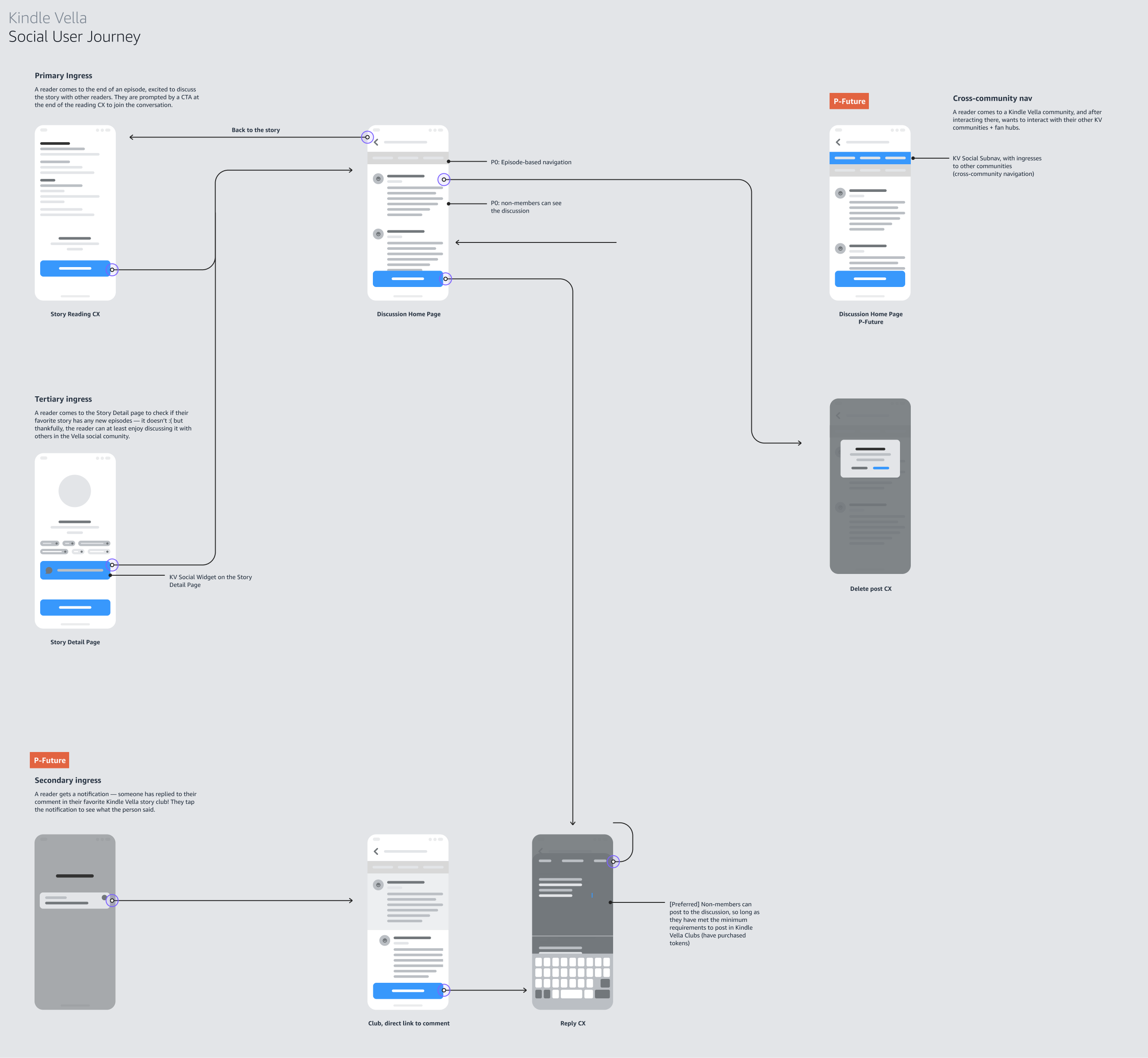
To help illustrate the key changes we'd need to make to support other kinds of readers & contexts, I created user journeys to facilitate these complex discussions & tech tradeoffs:
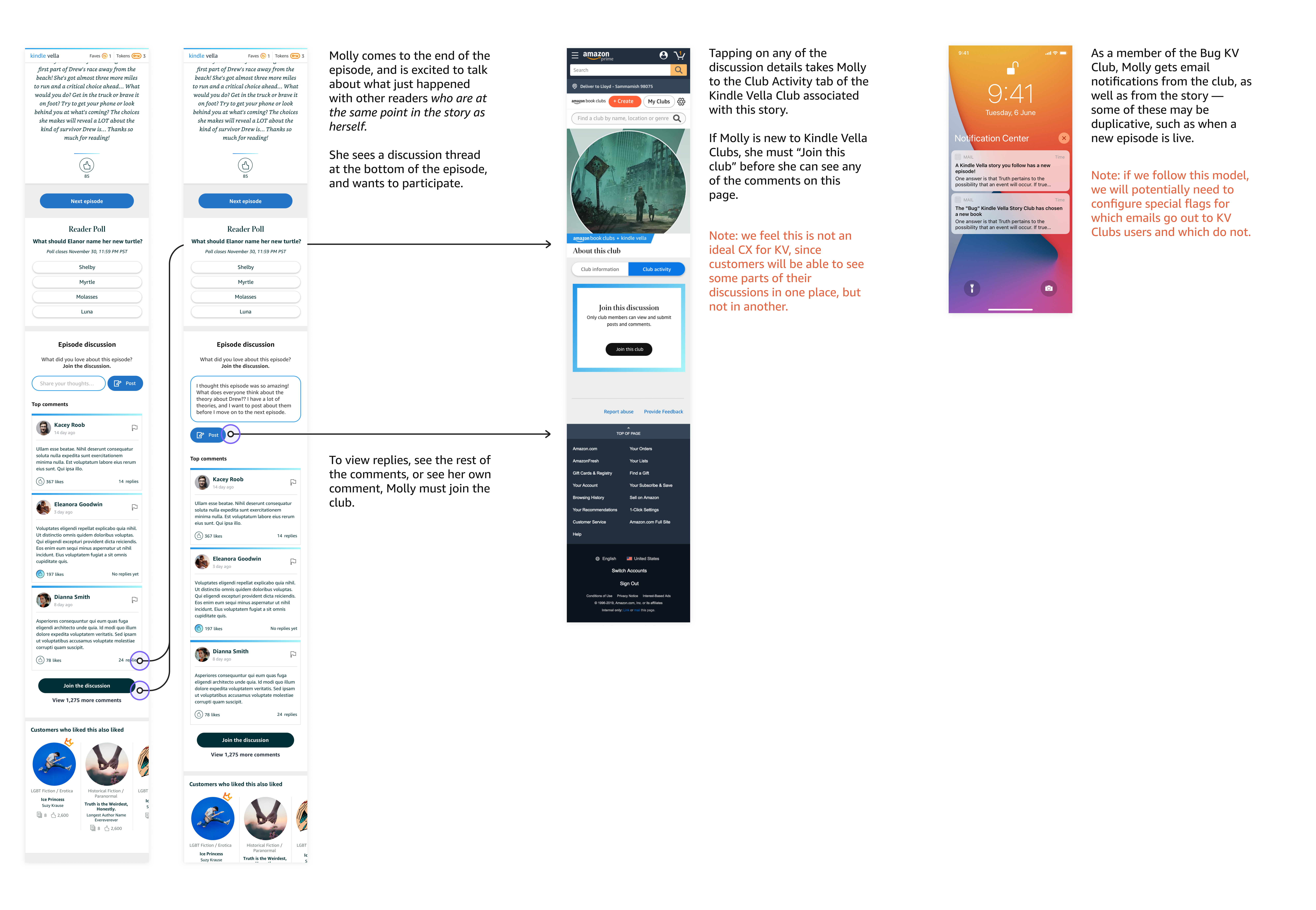
And ultimately, we aligned on key functional changes that could be more flexible across very different social reading experiences.
Design for everyone
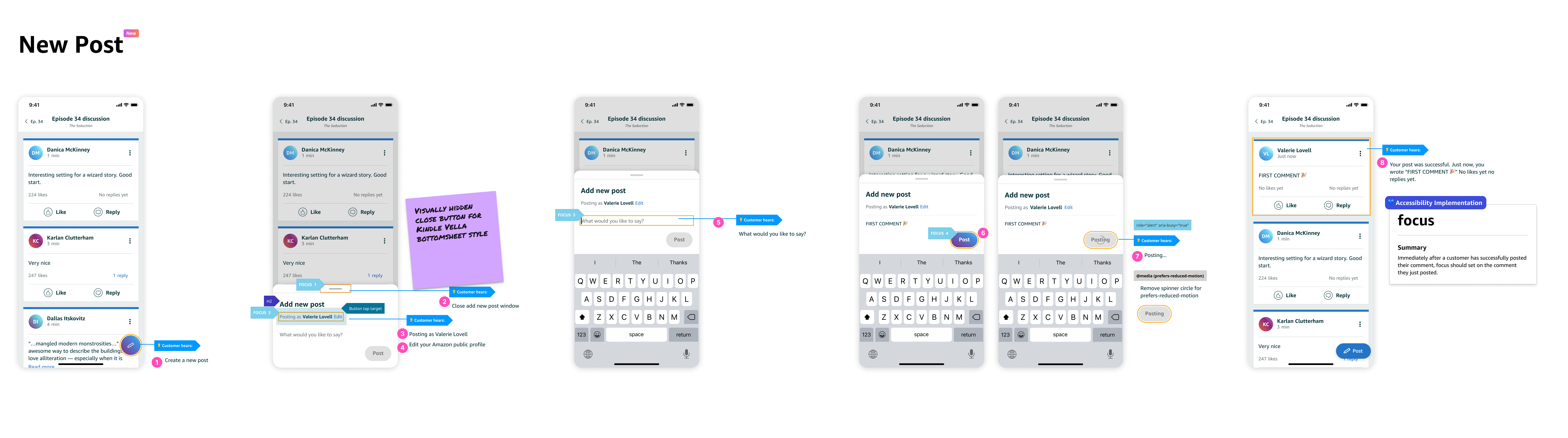
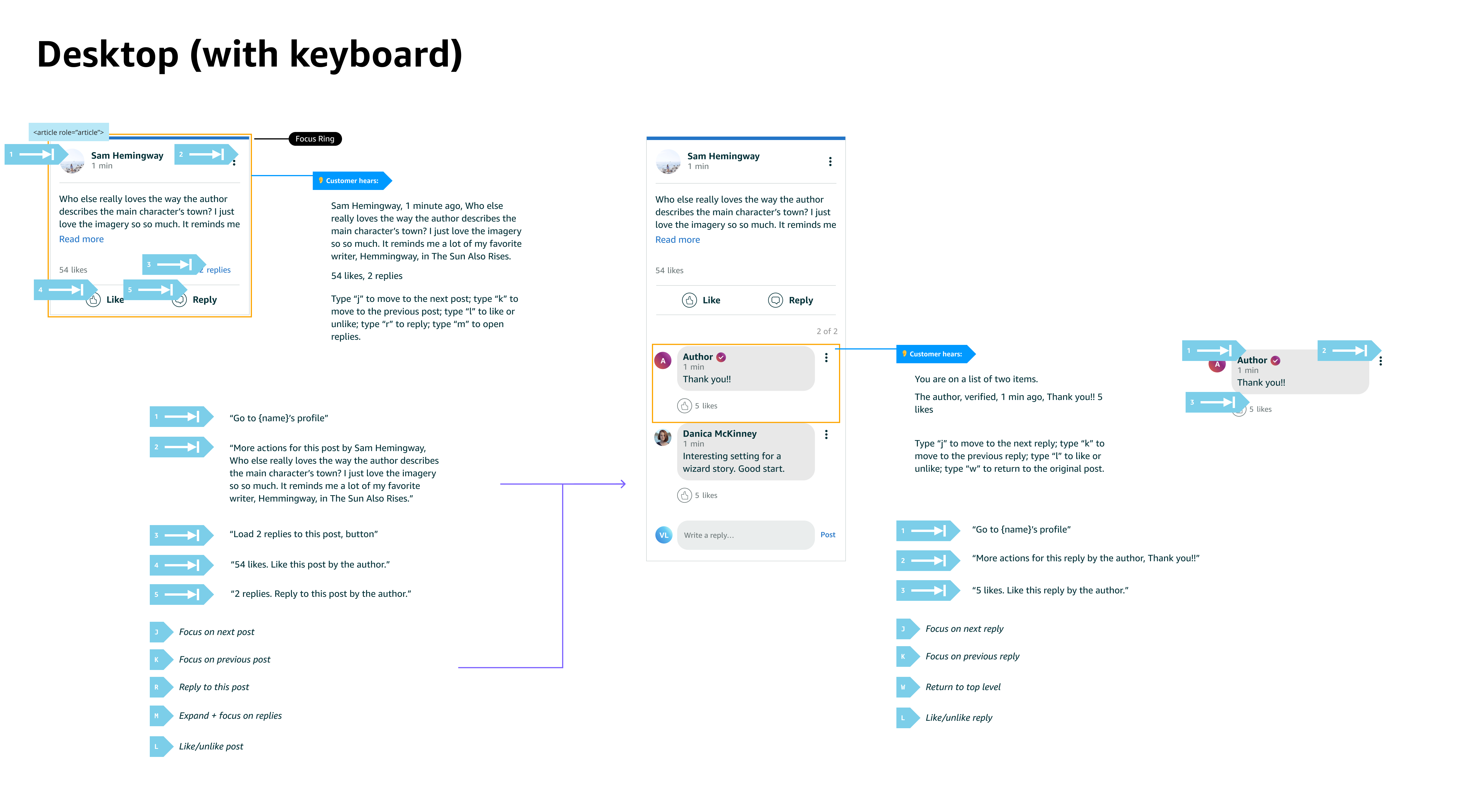
Another challenge we faced was that the existing front end components for Book Clubs weren't very accessible for screen reader users. We were committed to launching our commenting experience for all customers, so I took the opportunity to reimagine what a best in class accessible social experience should be like:
Designing for mobile-first Kindle Vella readers 📱
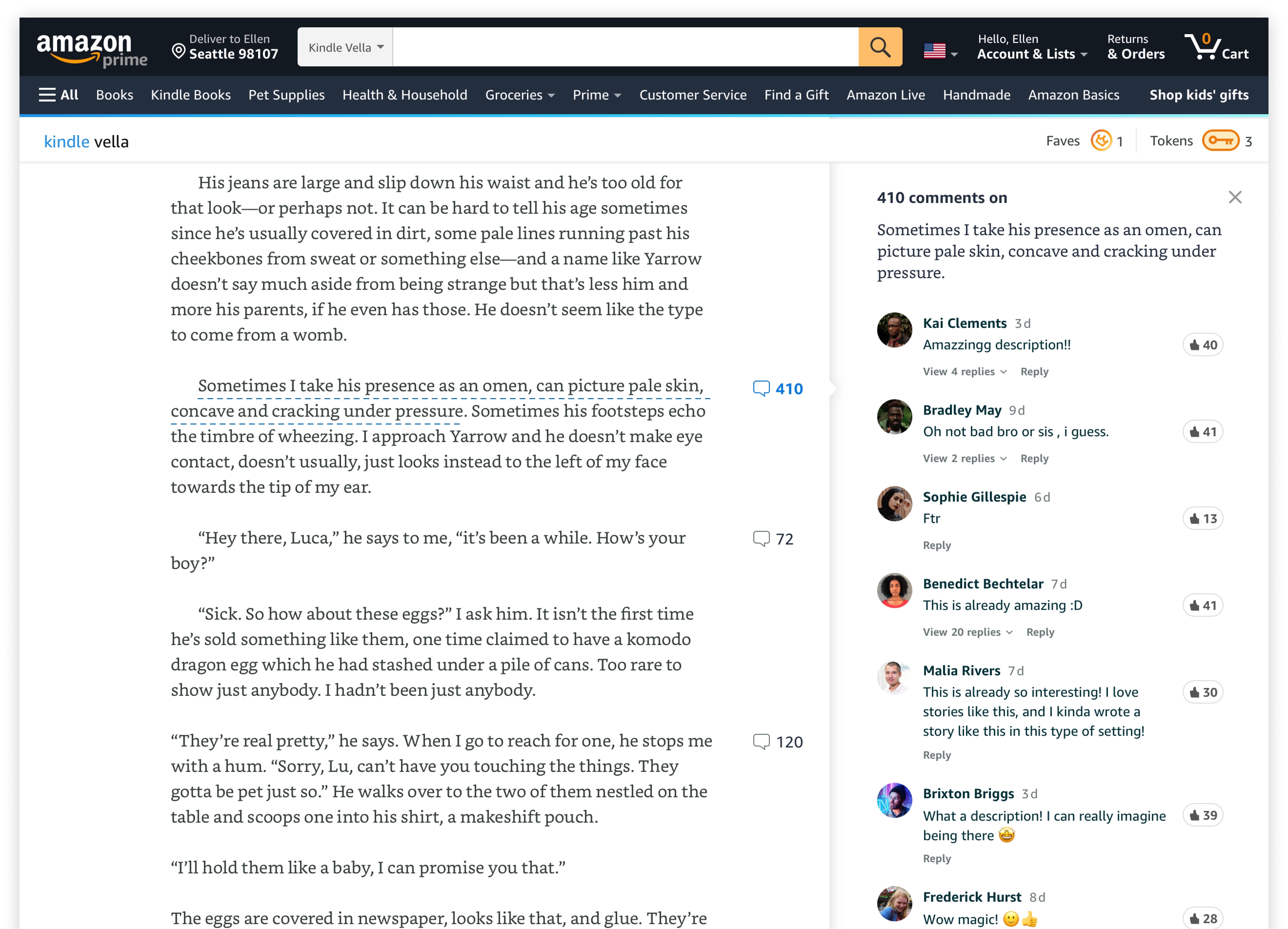
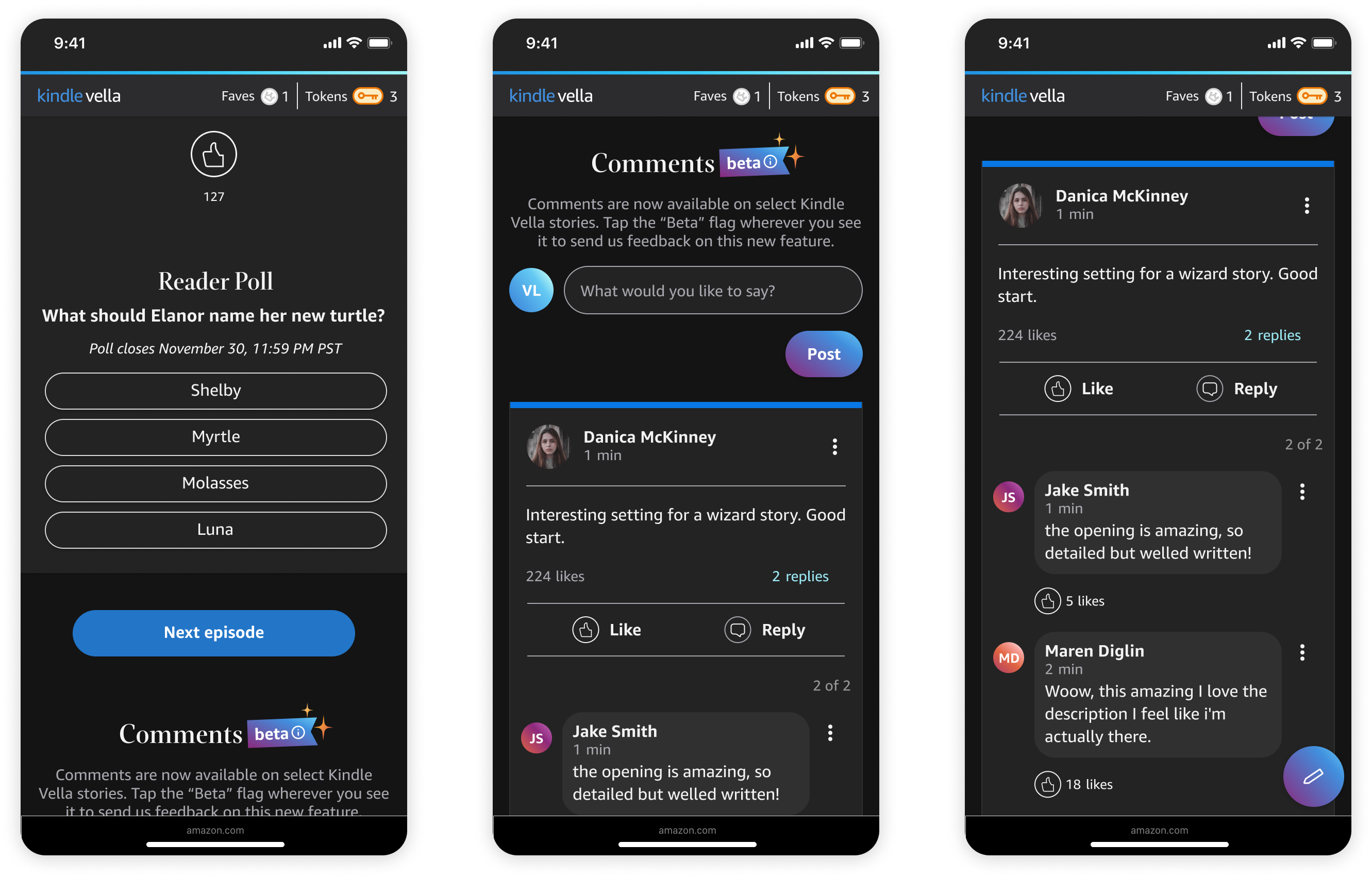
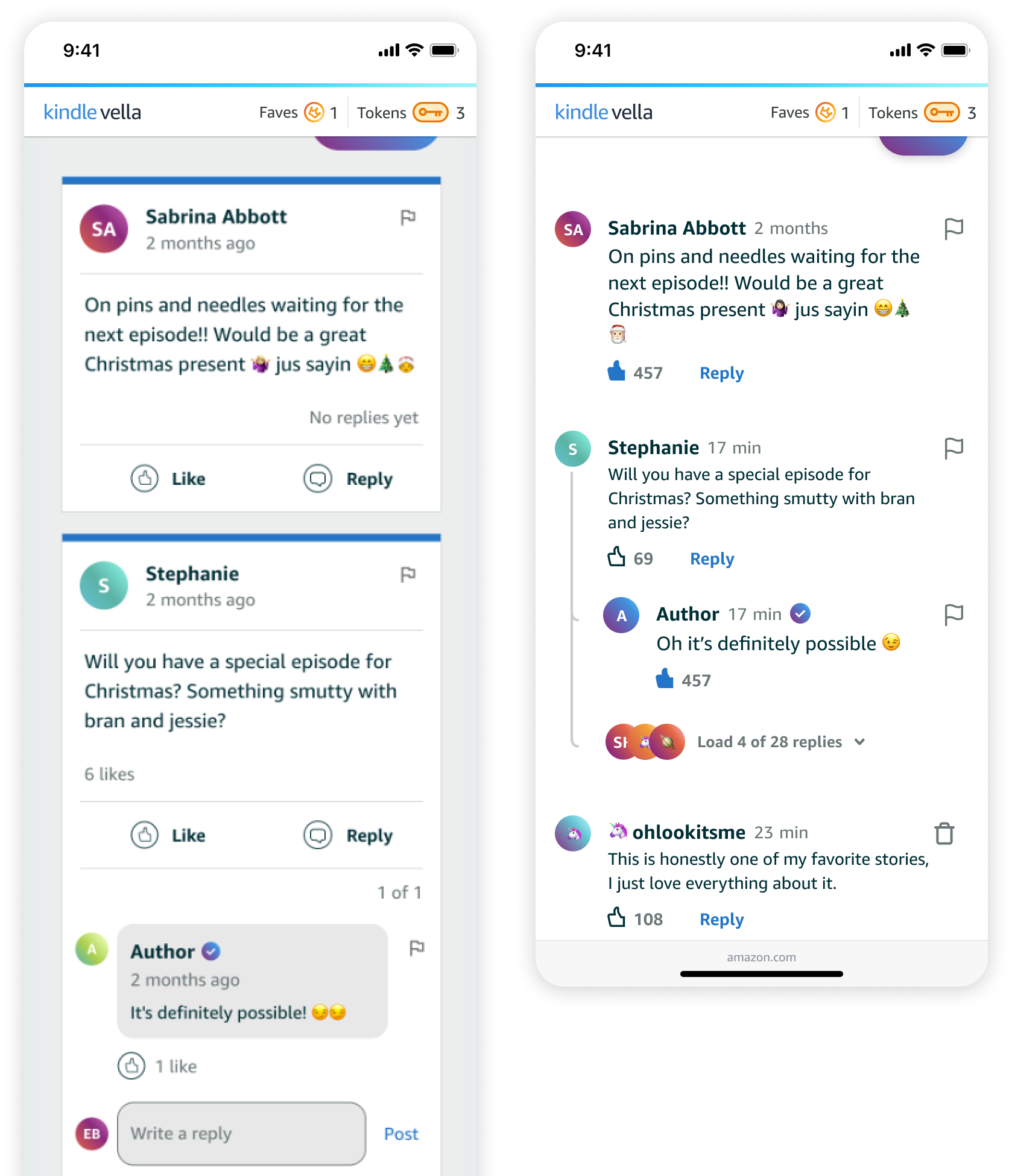
With the larger user journeys figured out, we turned to designing the components & screens, using Amazon Book Clubs' components as a baseline, and adapting it to suit our Kindle Vella experience and brand.
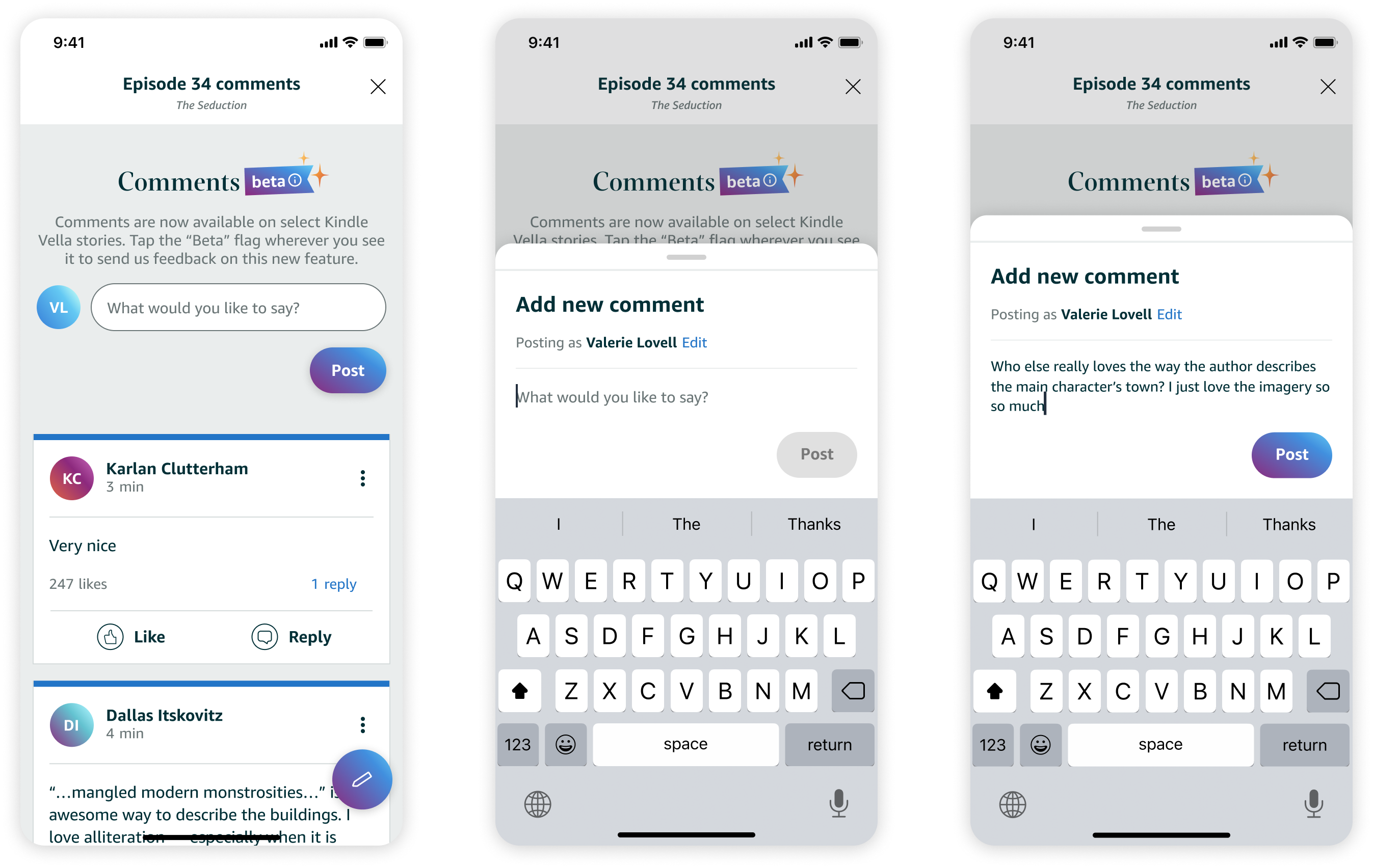
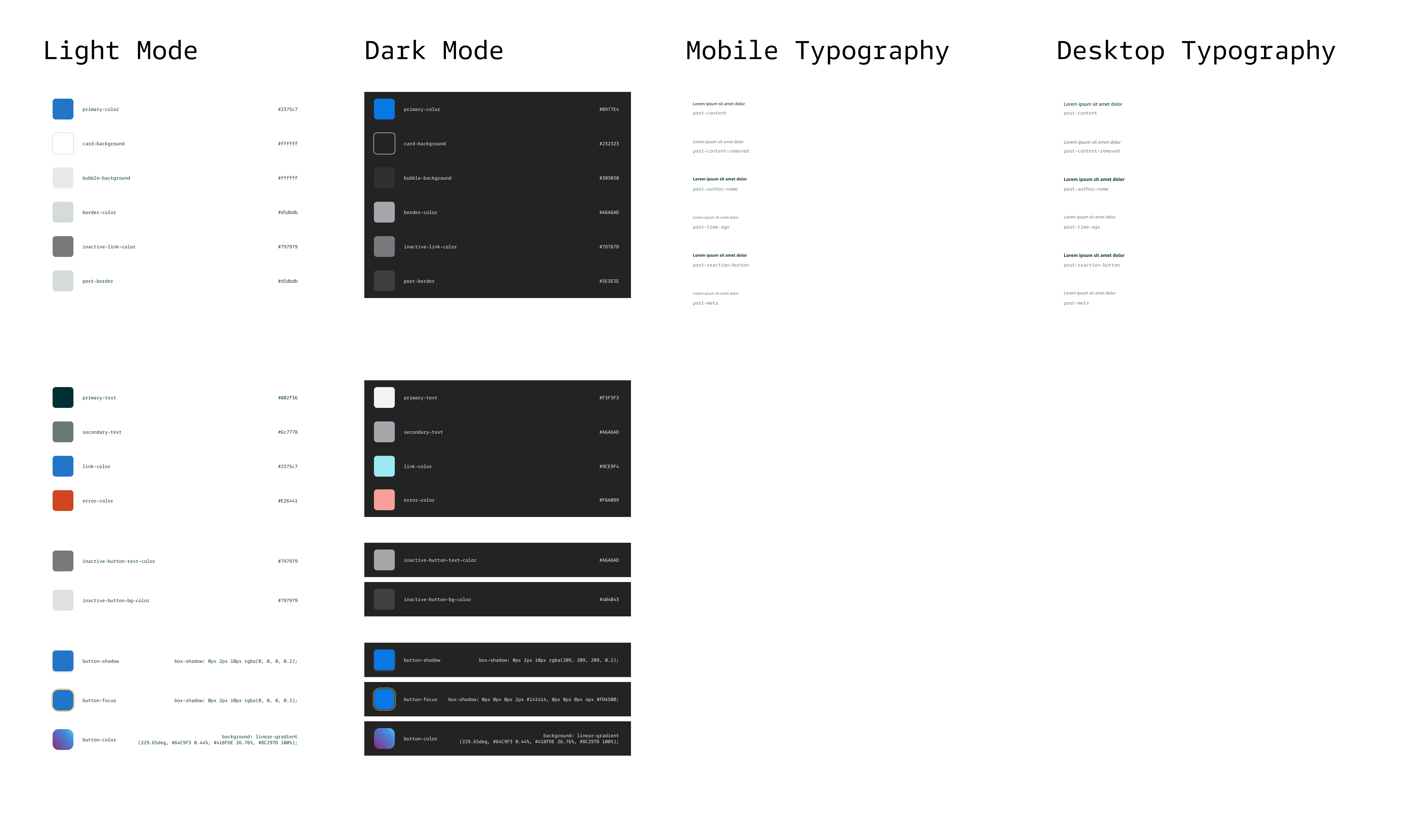
Leaning into design tokens for flexible, customizable theming
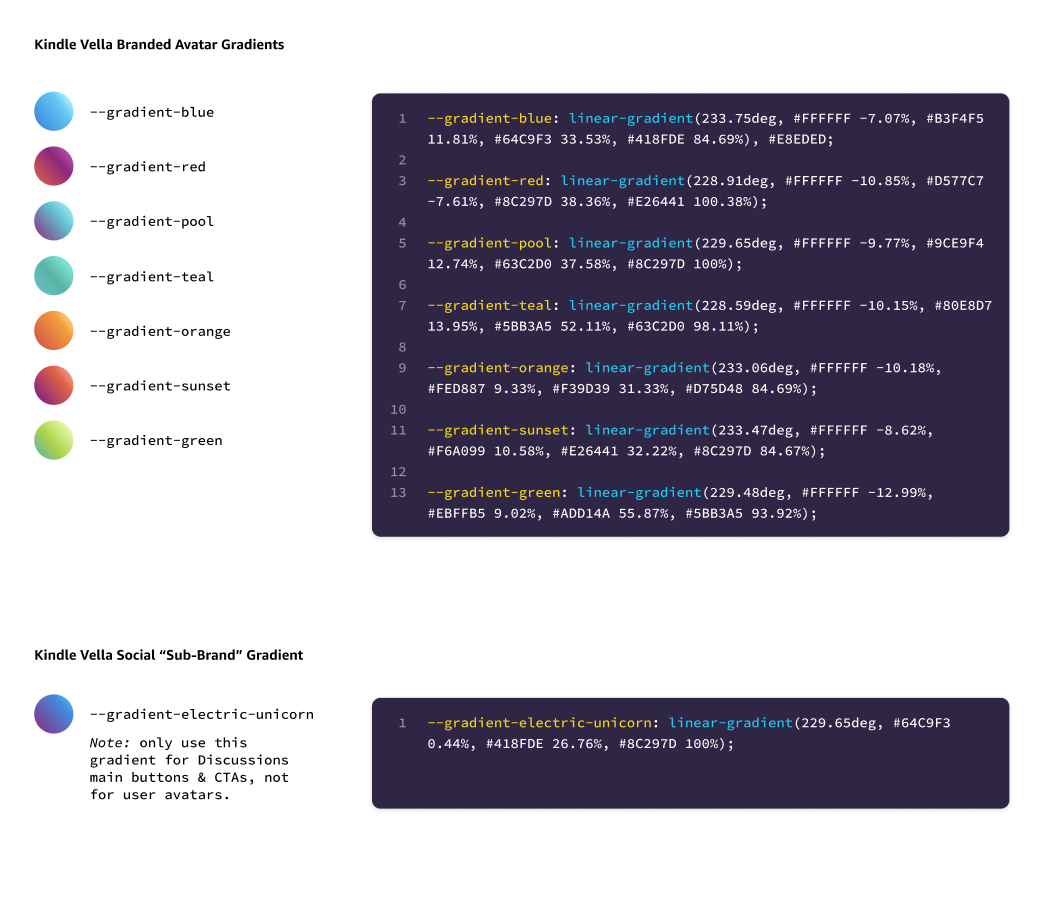
With the larger, systemic journey sorted out, we turned to the design of individual components. We wanted them to be consistent, so that customers didn't need to "re-learn" how to interact with social experiences at Amazon every time — but we also knew that Kindle Vella had a unique and specific sub-brand, and comments needed to feel just as "at home" in the Kindle Vella CX as it did in Amazon Book Clubs (or anywhere else customers might find it).
Additionally, each tenant had different needs & features they supported. For example, Amazon Book Clubs only had a light mode theme, but Kindle Vella had both light & dark mode, and supported push notifications (where ABC didn't).
With an developer team that was mostly experience with back-end engineering, the original proposal was to use nested if statements for every single change that needed to be handled for each tenant — in the long term, that was very unsustainable. I led the charge to implement design-tokens, which I knew could enable us to have flexible theming that would support each tenant's use case, while keeping most of our front end code reusable.
Driving towards a future vision ✨
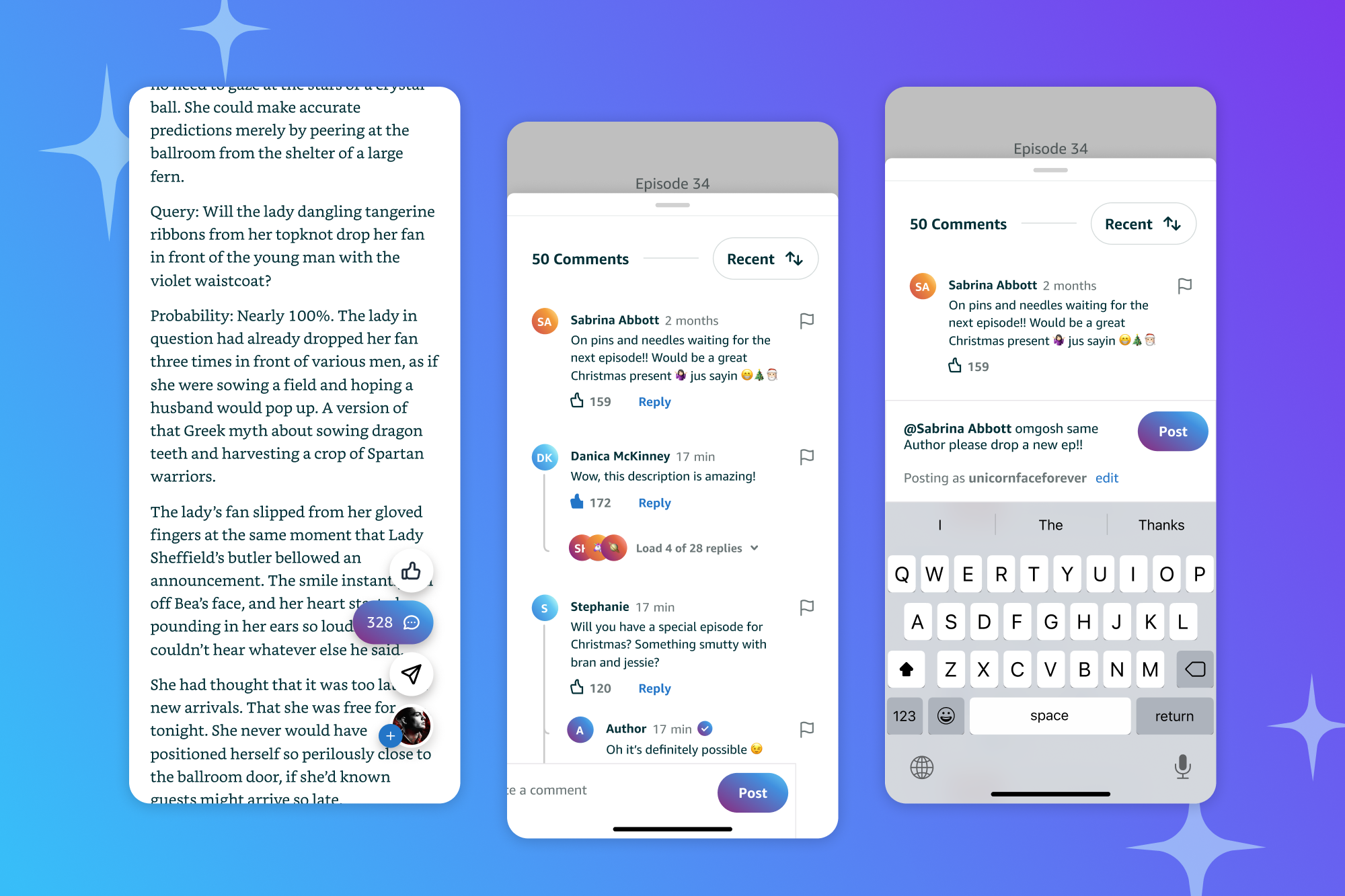
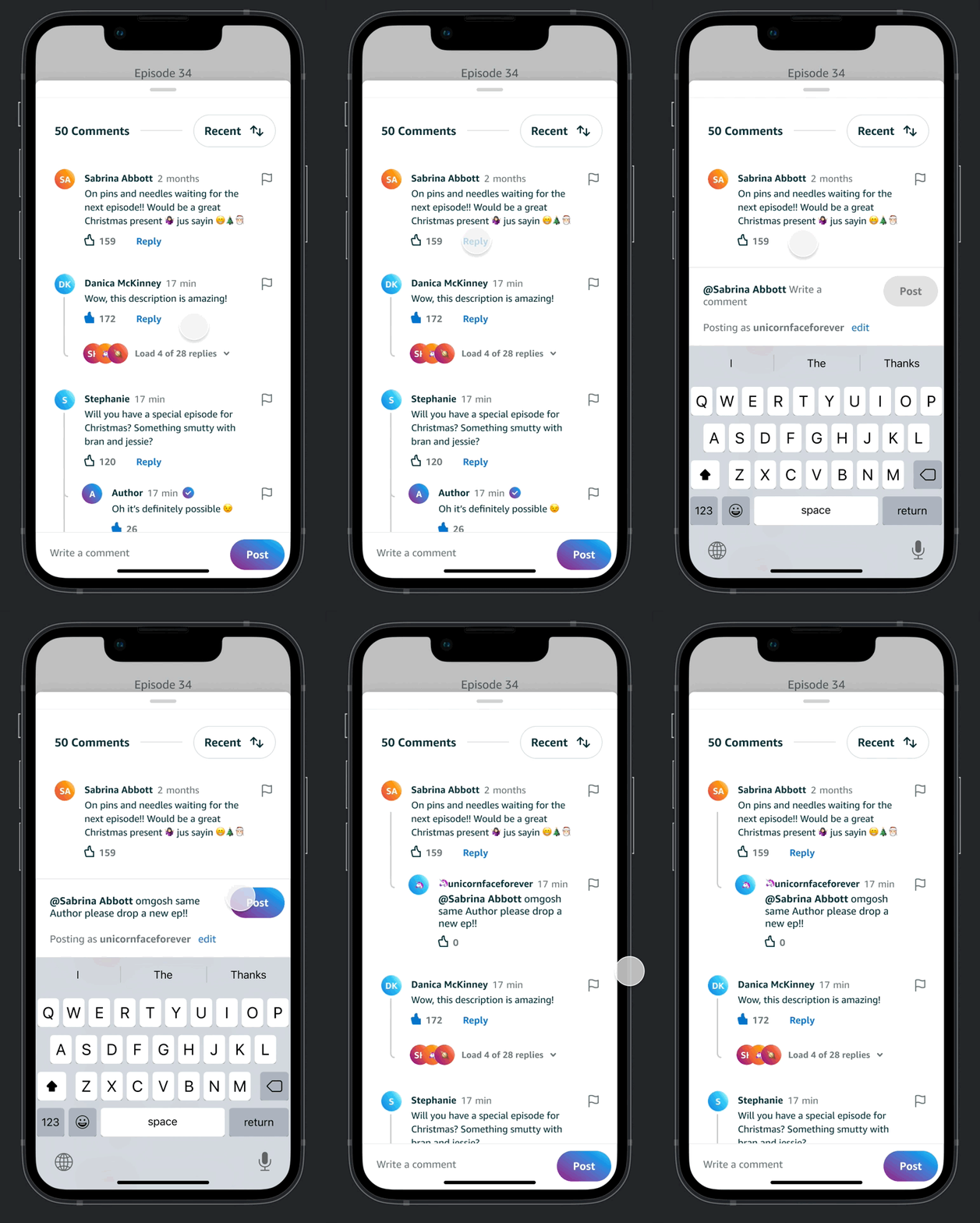
Outside of designing for the explicit launch ask, I also spent time prototyping our future vision to ensure we were building in the right direction and not "walking through any one-way doors."
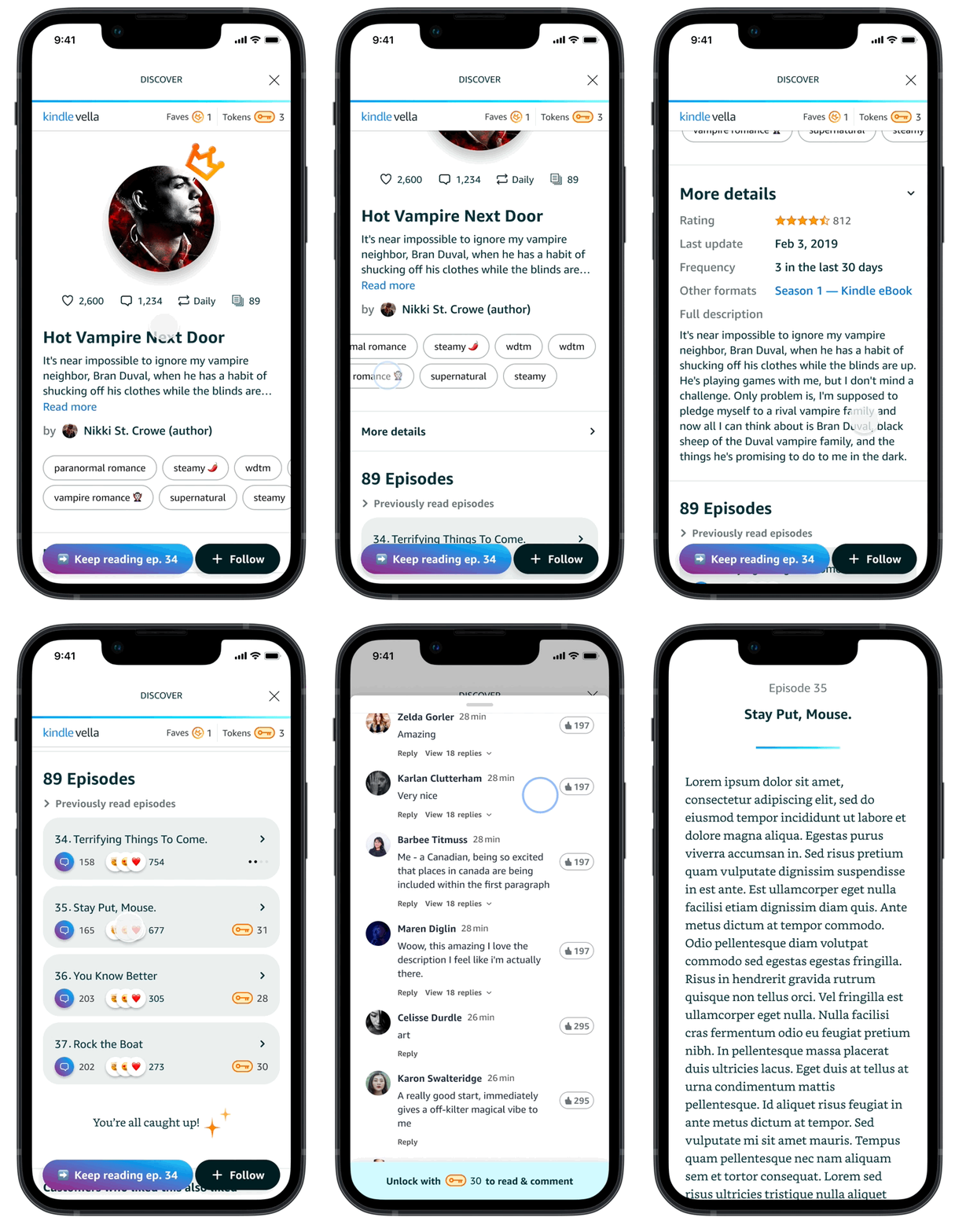
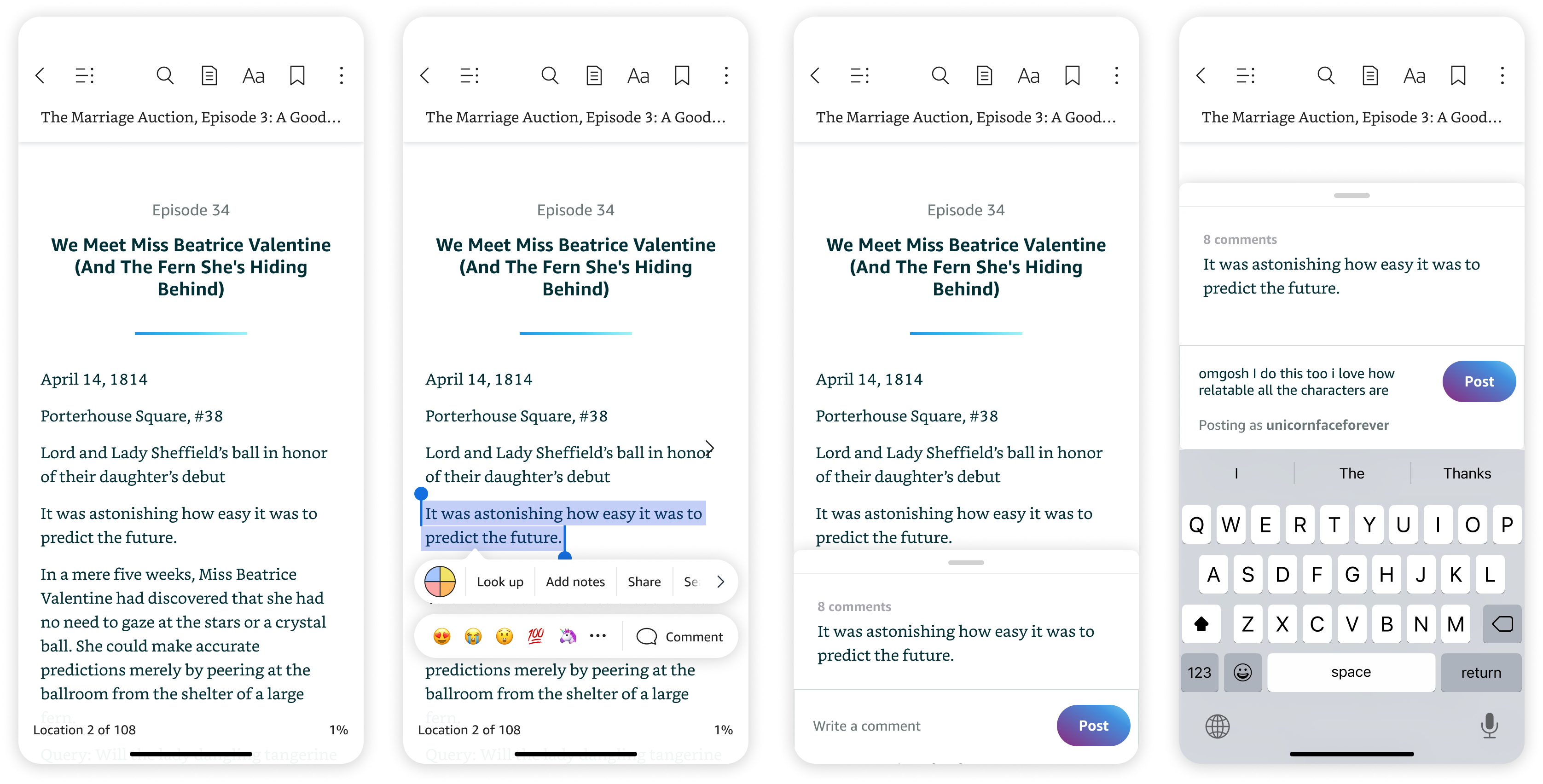
We also designed for inline comments, so readers could talk about what was happening as they read: